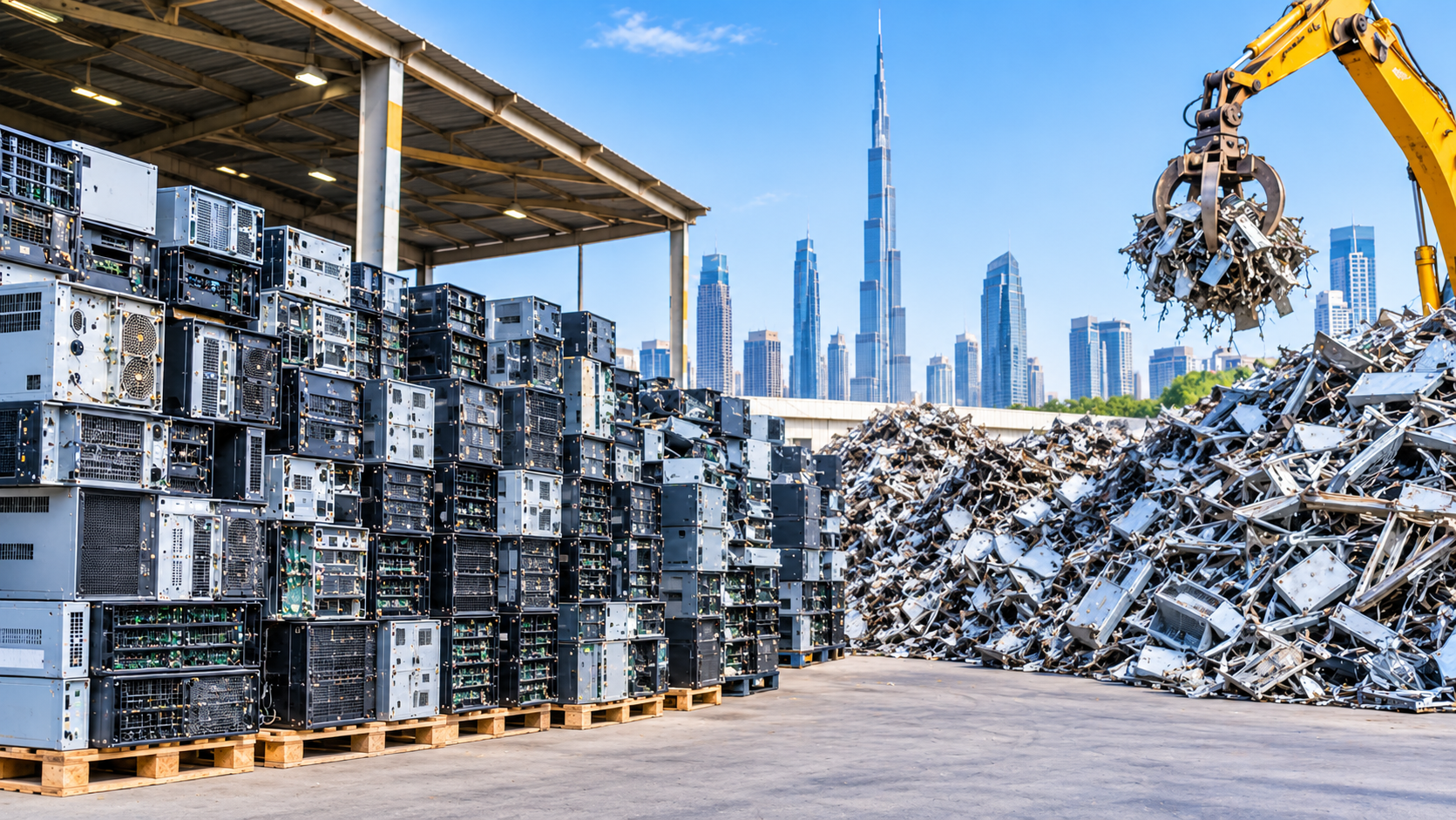
Businesses often accumulate large quantities of outdated computers, laptops, servers, printers, networking equipment, gaming systems, and other electronic devices. When this equipment is no longer required, choosing the right buyer becomes important. A local scrap dealer may seem like the easiest option, especially when a business wants to clear equipment quickly. However, large IT loads require more than basic scrap collection. Businesses should consider equipment evaluation, collection capacity, data security, payment terms, responsible handling, and experience with bulk IT equipment.
A professional bulk IT scrap buyer can offer a more organised approach for companies clearing large quantities. This is especially useful during office relocations, technology upgrades, warehouse clearances, branch closures, and regular asset replacement.
What Is a Bulk IT Scrap Buyer?
A bulk IT scrap buyer specialises in handling larger quantities of electronic and IT equipment. Instead of focusing on individual household items, such buyers can work with businesses that have complete lots of equipment.
A bulk collection may include:
- Desktop computers
- Gaming desktops
- Laptops
- Servers
- Networking switches
- Routers
- Printers
- Hard drives and SSDs
- Motherboards
- Monitors
- Projectors
- Gaming consoles
- Toner cartridges
- Other electronic accessories
The main advantage is convenience. Businesses can prepare multiple categories of equipment for one organised collection instead of contacting different buyers for every item.
How Is a Local Scrap Dealer Different?
A local scrap dealer may primarily focus on buying scrap based on material type, weight, or general resale potential. This can work for certain types of waste, but businesses with mixed IT equipment may need a more specialised approach. IT equipment can contain valuable components and functional parts. Some devices may still have resale value, while others may be suitable for parts or further processing.
Therefore, businesses should not select a buyer only because they are nearby. The buyer’s ability to handle the specific equipment, volume, transportation, assessment, and data-bearing devices should also be considered.
Why Bulk Dealing Matters for Businesses
Bulk dealing becomes important when a company has dozens, hundreds, or even thousands of unwanted devices. For example, an organisation upgrading its computer systems may have old desktops, monitors, keyboards, networking equipment, and storage devices available at the same time. Handling these individually would take significant time.
A bulk buyer can assess the complete lot and arrange collection according to the quantity and type of equipment.
This can help businesses:
- Clear storage areas faster
- Reduce internal handling
- Avoid multiple collection arrangements
- Organise mixed IT equipment
- Recover potential value from eligible equipment
- Simplify large equipment clearances
For companies with recurring IT upgrades, having a reliable bulk buyer can also make future disposal projects easier to manage.
What Should Businesses Check Before Choosing a Buyer?
The first thing businesses should check is whether the buyer has experience with commercial quantities. A provider handling a few devices may not have the same capacity as one regularly managing large IT loads. Businesses should also ask how equipment is evaluated. A transparent assessment process can help companies understand how the value of their equipment is determined.
Collection capability is another important consideration. Large quantities may require suitable transportation and proper loading arrangements. Payment terms should also be discussed before the collection. Businesses should know when and how payment will be made after the equipment is assessed. Finally, companies should ask how data-bearing equipment is handled. Computers, servers, hard drives, and SSDs may contain confidential information, so data security should not be overlooked.
Consider the Equipment Category and Quantity
Not every buyer handles every type of IT equipment. Businesses should provide a clear list of the items they want to sell. For example, companies clearing a gaming centre may have dozens of gaming desktops and accessories. A specialised gaming desktops buyer in bulk may be more suitable than a general scrap dealer. Similarly, businesses should mention whether the equipment is working, damaged, outdated, incomplete, or mixed. Accurate information makes the evaluation process more efficient.
The quantity also matters. A buyer that regularly handles bulk loads may be better prepared for a large commercial collection than a dealer primarily serving individual sellers.
Look Beyond the Highest Initial Quote
Price is important, but it should not be the only factor businesses consider.
A best gaming pc buyer should provide a clear and practical process. An attractive initial estimate may not be useful if the final assessment changes significantly or collection arrangements are inconvenient.
Businesses should compare the overall service, including:
- Equipment evaluation
- Bulk pickup capacity
- Payment process
- Data handling
- Collection convenience
- Accepted equipment categories
- Experience with business clearances
A transparent process can make a bulk transaction easier to manage from beginning to end.
Simplify Your Bulk IT Equipment Clearance With E-Waste IT Recycling
E-Waste IT Recycling helps businesses manage bulk quantities of unwanted IT equipment through organised collection and evaluation. Whether you are upgrading an office, clearing a warehouse, relocating a branch, or replacing outdated systems, our team can handle larger equipment loads.
We work with desktops, gaming systems, laptops, servers, networking equipment, printers, and other electronics. Businesses can share their equipment details and quantities to discuss their bulk collection requirements. Our approach focuses on making the process straightforward, from initial assessment to collection and payment. Contact E-Waste IT Recycling to plan your next bulk IT equipment clearance with a professional team.
Frequently Asked Questions
For large IT loads, a bulk buyer can provide organised collection, equipment evaluation, suitable handling, and simpler transactions compared with dealing with multiple local scrap dealers.
Businesses can commonly sell desktops, gaming computers, laptops, servers, printers, monitors, routers, switches, hard drives, motherboards, and other unwanted electronic equipment.
Businesses should create an inventory, separate equipment by category, note quantities and conditions, identify storage devices, and keep equipment accessible for efficient loading.
Yes. Working equipment, newer models, complete systems, useful components, and certain accessories may have different values compared with damaged, incomplete, or obsolete equipment.
Bulk collection reduces repeated arrangements and internal handling. Businesses can clear larger quantities together, free storage space, simplify logistics, and potentially recover value from unwanted IT equipment.