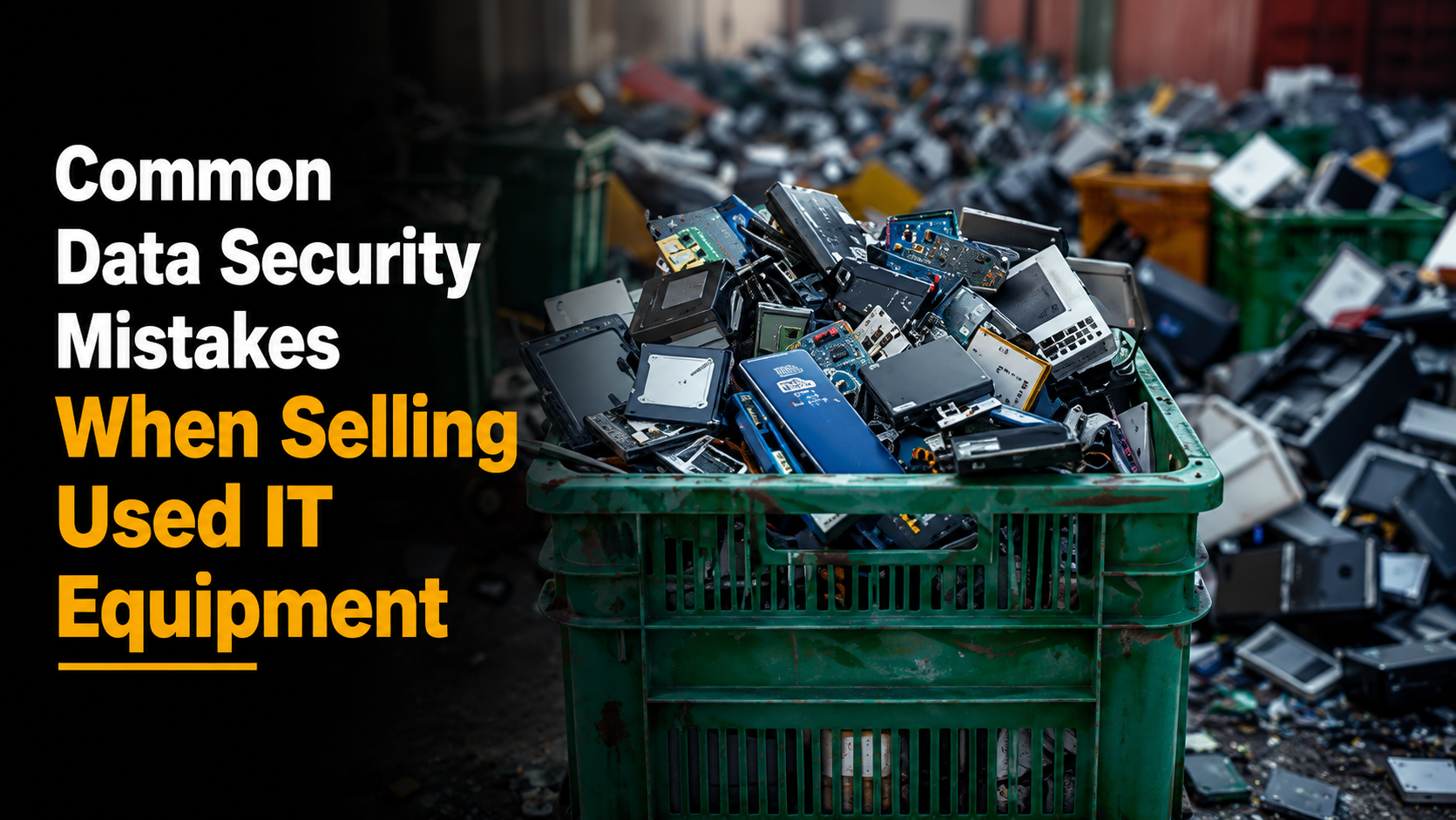
Businesses regularly replace computers, laptops, servers, storage devices, and networking hardware as technology changes. While upgrading equipment can improve productivity, it also creates a less obvious responsibility: protecting the information stored on those devices.
Selling old equipment without following proper data security procedures can expose businesses to serious risks. Files, passwords, customer information, financial records, employee details, and business documents may remain on storage devices even after files appear to have been deleted.
This risk becomes greater when companies are clearing large quantities of equipment at once. A proper process is therefore essential before selling used IT equipment, particularly during office upgrades, data center clearances, and large-scale IT asset replacement projects.
Why Data Security Matters When Selling Old IT Equipment
IT equipment can contain information that businesses cannot afford to expose. Simply deleting files or performing a factory reset may not always provide adequate protection.
Storage devices such as hard drives and SSDs can contain:
- Customer information
- Employee records
- Financial documents
- Login credentials
- Business contracts
- Internal communications
- Software and system information
When dozens or hundreds of devices are being retired, checking each asset individually can become difficult. This is why businesses need a structured disposal process that combines data protection with efficient equipment collection.
Common Data Security Mistakes Businesses Make
1. Assuming Deleted Files Are Gone
One of the most common mistakes is believing that moving files to the recycle bin permanently removes them.
In many cases, deleted information may remain recoverable from the storage device. Businesses should therefore use an appropriate data destruction method before equipment leaves their premises.
2. Relying Only on a Factory Reset
A factory reset can remove user settings and applications, but businesses should not automatically assume it guarantees complete data removal.
Different devices and storage technologies require different approaches. Companies handling large inventories should establish a consistent process for storage media before selling or recycling equipment.
3. Forgetting About Secondary Storage
Businesses sometimes focus on computers and forget that other equipment may contain stored information.
Servers, external drives, networking devices, printers, and certain multifunction machines may retain information or configuration data. Every asset should therefore be assessed before disposal.
4. Selling Equipment Before Checking the Data
Moving equipment directly from an office or storage room to a buyer without completing a data security check creates unnecessary risk.
A better approach is to identify all storage-bearing equipment first, document the assets, and complete the appropriate data destruction process before collection.
5. Mixing Cleared and Uncleared Equipment
During bulk IT upgrades, cleared devices can easily get mixed with equipment that still requires processing.
Simple asset labeling and tracking can prevent this problem. Businesses should maintain a clear record showing which equipment has been checked, processed, and approved for sale or recycling.
Why Professional Secure IT Asset Disposal Helps
Professional secure IT asset disposal services can simplify the process for businesses handling large quantities of equipment.
Instead of asking employees to individually prepare hundreds of devices, businesses can work with an experienced provider that understands asset handling, data protection, collection, and responsible recycling.
This becomes particularly useful during:
- Office relocations
- Corporate technology upgrades
- Data center decommissioning
- School equipment replacement
- Warehouse clearance
- Company closures
- Large IT refresh projects
Professional handling also reduces the likelihood of equipment being misplaced or leaving the organization before security checks are completed.
Why Bulk Buyers Need Strong Security Processes
Bulk transactions require additional planning because a single collection may involve dozens or hundreds of devices.
A professional bulk e-waste buyer company should be able to handle the volume while maintaining clear processes for equipment identification, data security, collection, and recycling.
Businesses should ask questions about:
- How equipment is collected
- How storage devices are handled
- What documentation is provided
- How assets are tracked
- Where equipment goes after collection
- How reusable and non-reusable items are separated
Choosing a provider based only on price can create unnecessary risks. Security, transparency, and responsible processing should be considered alongside the financial return.
How Businesses Can Make Bulk IT Disposal Safer
A few practical steps can significantly improve data security during large equipment clearances:
- Start planning before the collection date.
- Create a complete asset inventory.
- Identify every storage-bearing device.
- Separate processed and unprocessed equipment.
- Use appropriate data destruction procedures.
- Maintain records throughout the project.
- Choose an experienced recycling and asset buyer.
- Confirm how equipment will be handled after collection.
These steps create a clear chain of responsibility and reduce the possibility of sensitive information being exposed.
Selling old IT equipment can provide financial value, but businesses should never overlook data security. Proper preparation, asset tracking, professional disposal, and responsible recycling help reduce the risks associated with retired technology.
For large equipment clearances, businesses should work with experienced providers capable of combining secure handling with efficient bulk collection. Whether you are replacing office computers or clearing an entire data center, secure data wiping should be completed before equipment leaves your control.
Choose E-Waste IT Recycling for Secure Bulk IT Asset Solutions
E-Waste IT Recycling helps gaming businesses across Dubai and the UAE manage outdated IT equipment through organized bulk collection, responsible recycling, and secure asset handling. Our team supports businesses during office upgrades, technology refreshes, warehouse clearances, and large-scale IT disposal projects. We handle computers, laptops, servers, networking equipment, and other electronic assets with care. By combining convenient pickup services with professional evaluation and responsible processing, we make large equipment clearances easier to manage. Businesses can clear valuable storage space, recover value from surplus assets, and follow a more responsible approach to electronic waste management.
Frequently Asked Questions
Old computers and storage devices may contain sensitive information. Proper data destruction helps prevent unauthorized access to business, customer, financial, employee, and confidential company information.
No. Standard file deletion may leave recoverable information behind. Businesses should use an appropriate data destruction method suited to the storage technology and security requirements.
Computers, laptops, servers, hard drives, SSDs, printers, networking equipment, external drives, and other devices containing internal or removable storage should be checked before disposal or resale.
Businesses should create an asset inventory, identify storage devices, complete data destruction, maintain proper records, and choose a professional provider for collection and responsible recycling.
Yes. After appropriate data destruction, reusable equipment may be refurbished or resold, while unsuitable devices can be processed through responsible electronic waste recycling methods.